Manok Na Pula First-Hit Timing — The Strike Bar (2026)
Every fight in Manok Na Pula opens with one tap on the strike bar, and that tap decides who lands the first hit. A tap that lands in the blue band gives your chicken the opening strike; between two evenly matched chickens, that decides the fight.
Too early or too late
The opponent strikes first
The narrow middle zone
Both strike at once; the higher stats win the exchange
The blue band
You strike first, at full damage
Why Does the First Hit Matter So Much?
Because the chicken that opens the exchange has already done damage when the other one starts. With a large stat lead you can tap badly and still win. In a close matchup you cannot, and close matchups are most of what you meet as you climb.
Why Does Timing Beat Stats?
Stats are consulted only when both chickens strike at once. A tap in the middle zone produces that trade, and the higher numbers win it. A tap in the blue band skips the trade entirely: your chicken strikes before the comparison ever happens.
That is how a modest chicken with clean timing beats an expensive one played carelessly. Upgrades raise your floor in trades; timing lets you avoid trades altogether. Spend the first effort on the bar, then on the shop.
What Are the Three Zones on the Strike Bar?
Miss, trade and first hit. A marker sweeps across the bar, and where it sits when you tap sets the outcome. Outside the zones, the opponent opens. In the narrow middle zone, both chickens strike together. In the blue band, yours strikes alone.
What Should You Watch: the Bar or the Chicken?
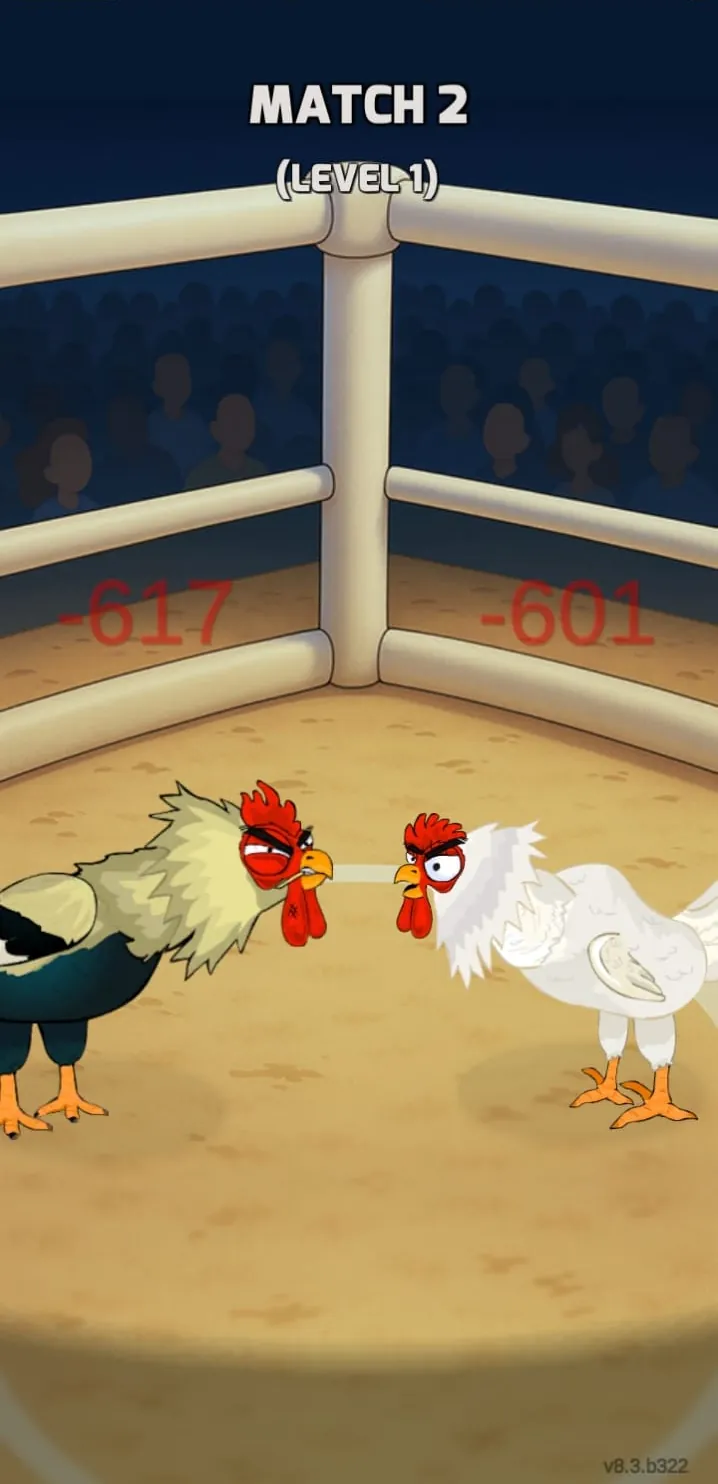
The bar. The attack animation is drawn after the game has already resolved where the marker sat, so it shows a decision that is already made. A tap timed to the animation lands late, every time, and no amount of practice makes it faster. Moving your eyes from the chicken to the marker is the single change that improves timing the most.
Does the Chicken Change the Timing?
Yes. A faster chicken widens the blue band slightly, which makes fast chickens more forgiving to time. A slow, heavy chicken has a narrower band and pays for it with durability: it survives the opening hit a mistimed tap gives away.
Choose a durable chicken while you are learning the band, and a fast one once you land it most of the time. A fragile, high-attack chicken is the worst one to learn on: every miss costs the fight, so there is no room to practise.
Does the Arena Change the Bar?
No. The bar behaves the same way in every place, including Tournament.
What Changes in a Live Match?
The mechanic stays the same online — the same three zones, the same band, the same rule to watch the bar. What changes is pressure: a reflex that felt automatic offline slips when a bet and a rank are on the line, and nerves pull taps early.
The connection matters too. On unstable Wi-Fi or mobile data a well-timed tap can register late and turn a clean read into a miss. Most misses are timing, not lag, but rule the connection out before deciding the read was wrong.
Which Timing Mistakes Cost the Most Fights?
How Do You Practise It?
In three stages.
Find the zone
Play offline fights and watch only the bar until you can say, before the result shows, which zone you hit. Losing these fights costs nothing: offline matches carry no account risk.
Build consistency
Stay offline and vary the opponents until you land the blue band in most fights in a row, whatever chicken you face.
Take it live
Move to online matches only once the read is a reflex rather than a decision, and bet small until your rate holds. The sign you are ready: you no longer think “watch the bar” in the middle of a match.
Skipping to stage three is the most common mistake: it turns a free learning curve into one paid for in coins and rank.
The rest of the basics are in Manok Na Pula basics. The game file is on the Manok Na Pula home page.